_edited.png)


UNDERWATER OPERA No.16/24.07
- Jul 24, 2025
- 4 min read
Yes, Underwater Opera exists and has nothing to do with soap opera.
There is a funny song in Poland: 'Anyone can sing...' This is an obvious truth. But the next verse adds or clarifies: '… A little better or a little worse.' That's right too.
Life is singing
It is a reasonable belief that singing was the earliest means of human contact. Of course, 'a little better or a little worse'. But it was not a human invention. Singing is older than us, humans. In a sense, the whole world sings: the seas, the winds, the trees, the birds, and other creatures. After all, we too, like others.
Perhaps it's different with beauty. But that depends on the point of view. Beautiful is not what is beautiful, but what someone likes.
Sometimes we sing just for ourselves. Muttering, humming, or singing at the top of our lungs. However, we probably sing for someone more often. A mother sings for her baby. Romeo to Juliet (under the balcony!), mourners for the deceased. We sing on trips, at bonfires, games, celebrations, when we are together. Sometimes in choirs. Sometimes studying it. If we start to like it very much, we go to a concert, a musical, an opera, or an open-air festival. Depends on the stage.
And where is the biggest stage?
The largest opera house in the world is in Sydney: plot 1.8 ha, bldg. dim: 183x120 m.

But the audience of NY Metropolitan Opera has 3,800 seats.

The largest audiences ever reportedly attended a concert of Rod Stewart's. Open-air on Copacabana Beach, Rio de Janeiro, Brazil in 1994: 3.5-4 million viewers. Listeners? Difficult to imagine. Most of the audience probably didn't even see what was happening on stage, but the atmosphere of the event was unique. For sure.

The largest concert halls for the largest singers
Can there be a larger auditorium anywhere? Yes, there is! Except for the audience. It's hard to achieve such a number with another species of creature. Although the space could be much larger. As well as the size of the singers.
Those concert halls occupy 70% of our Blue Planet. I mean the oceans. Those singers are humpback whales. Their size guarantees a volume adequate to the size of the 'concert rooms'. Weight: up to 35-40 tons, length: 14-17 meters. Their voices carry easily over 15,000 km. They live to be a respectable 80-90 years old. Although one of the artists was found in Greenland who likely lived for 211 years. Only.

What (and how) do whales sing about?
They produce two types of sounds. Localization sounds (ultrasounds reading terrain map) and communications (incl. 'artistic feelings'?) Humpbacks can sing for hours, blowing air through their massive nostrils. They manage without vocal cords. Each individual has its own distinctive voice. The young ones recognize their mother's voice perfectly. But females are sparing in their vocal performances.
The male emits long and loud songs. Each of them consists of a series of low-pitched sounds with varying amplitude and frequency. As you see (or rather hear), there are no tenors in that ensemble. Humpbacks' dialogues are compared to singing because they contain regular sequences that repeat rhythmically. Humpback's songs vary in length, from 10-20 minutes to as long as 24 hours! Of course, with short pauses for breath. Understandably so!
A spectacle with the greatest amplitude
It was humpback whales that made people go on long expeditions. Nowadays – also expensive tourist trips. Temptation to listen to a unique concert of creatures much older and larger than us, humans. Oh, such concerts are often enhanced by extraordinary dance and acrobatic shows. Because 'the greatest artists' can jump up to 6 meters above the surface of the ocean. This is the view of jumping rock! And these fountains of water! NB Our human pole vault world record is 6.28m. Pole vault! And humpbacks jump without.
Migratory artists can be found in almost all waters around the world. They feed only in summer, and in winter they subsist on stored food from their body. Their population is estimated at approximately 80,000 individuals. And it is slowly coming back to life after centuries of cruel whale hunting. Some have names given by the scientists who follow them. How do they recognize them? They have unique individual patterns on their body (feathers) distinguishing them like our fingerprints.
If we admire The Biggest, let me mention also the smallest competitors of our opera stars in nature: Havana hummingbird: long at 6 cm, weight 2 grams, heart rate 50-180 per minute, speed 120 km/h. He loves to sing, but it's hard to follow him at least to hear....
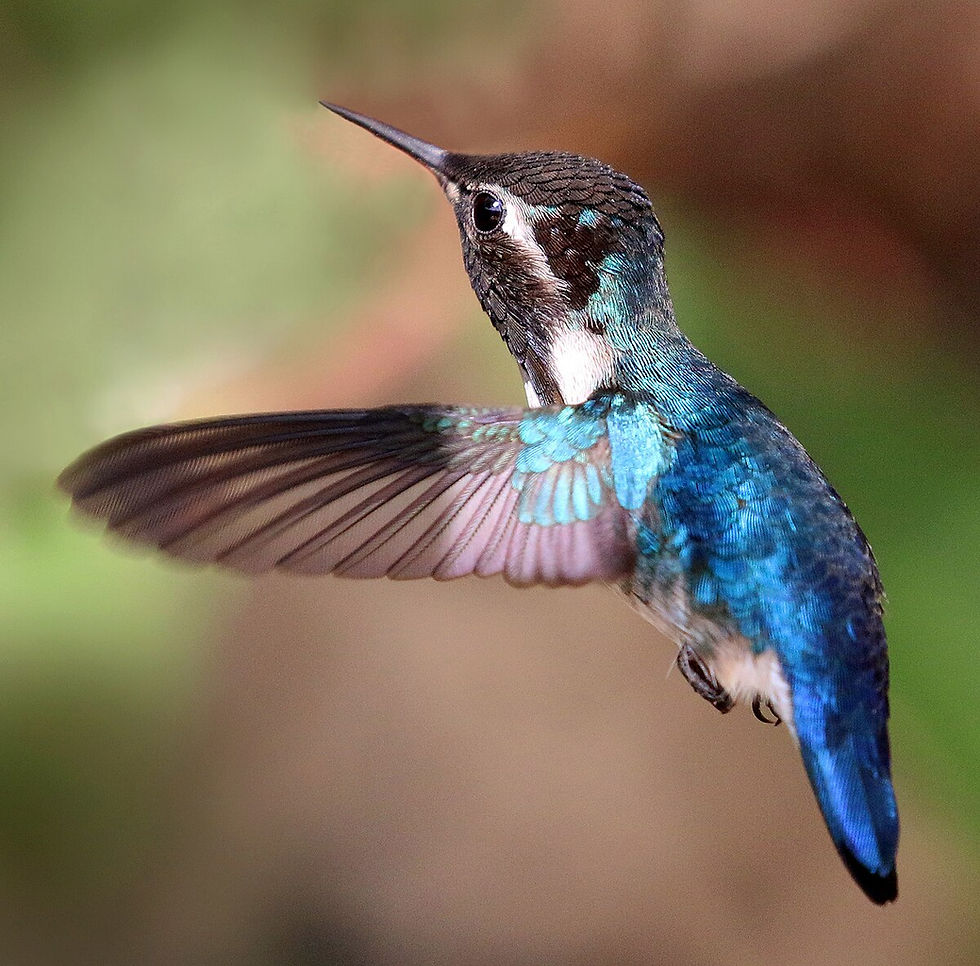
In English we have a saying: Life passes with singing In Polish we say: Life passes with flying. Looks like both, humpbacks and hummingbird trying to realize both versions???
Enough words.
Let us play: Singing of a humpback whale
But... if anyone would like a small appetizer before the main course, I'd recommend 'The Trout' (Die Forelle), a beautiful song by Franz Schubert. Delicious. (If you own a Samsung washing machines, you will probably know this melody very well!)

Written by
Cezary Owerkowicz
Co-founder of Kuwait Music Academy and
Director of Treasure of Talents Festival in Kuwait


